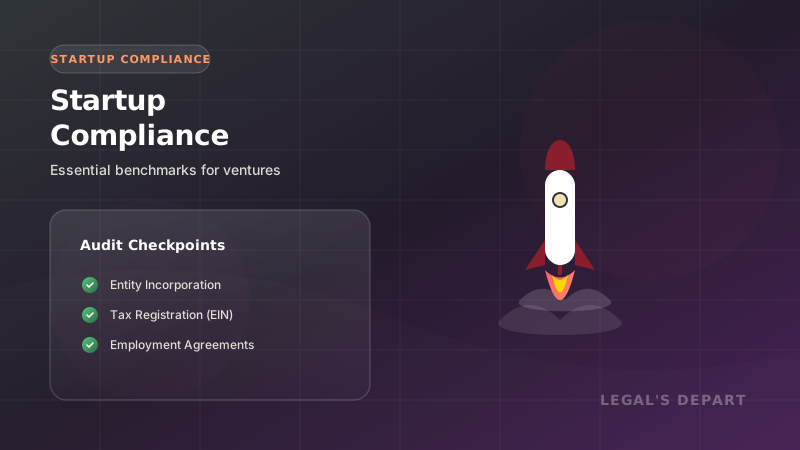
Building a Solid Regulatory Foundation
Starting a new business requires navigating entity selection, tax compliance, and industry licensing. In the rush of product development, customer acquisition, and fundraising, founders frequently put off regulatory checkmarks. However, addressing these compliance obligations early is essential to prevent costly legal disputes, heavy regulatory fines, and issues during venture capital due diligence.
A compliant startup is a highly fundable startup. Investors look for clean corporate registries, compliant employment agreements, and solid intellectual property chain-of-title. Laying a solid regulatory foundation now protects your equity and keeps your venture moving smoothly.
Primary Compliance Milestones
Every founder should evaluate the following core milestones during early-stage operations, dividing their attention between structure, taxation, and operational safeguards:
1. Corporate Form
Choosing the correct structure determines your tax liability, management flexibility, and investor suitability.
2. Tax Compliance
Securing your tax identity (EIN/TIN), sales tax registrations, and franchise tax filings from day one.
3. Labor Agreements
Creating clear IP assignment contracts, employment agreements, and contractor terms of service.
4. Data Privacy
Implementing terms of service, privacy policies, and security frameworks (such as SOC2 or GDPR).
Entity Type Comparison: LLC vs. C-Corporation
Choosing your legal structure is one of the most critical decisions a startup founder will make. Below is a comparative breakdown of the two most common entity types utilized by startups:
| Feature | Limited Liability Company (LLC) | C-Corporation (C-Corp) |
|---|---|---|
| Best Suited For | Small businesses, lifestyle companies, single-owner firms. | High-growth tech startups aiming for venture funding. |
| Taxation | Pass-through taxation (profits taxed on personal returns). | Double taxation (taxed at corporate and individual levels). |
| Equity Sharing | Complex membership interest tracking. | Simple stock issuance (preferred, common options). |
| VC Preference | Generally avoided by VCs due to tax complexities. | Strictly preferred (often required to be Delaware C-Corps). |
Operational Compliance Checklist
Make sure you have checked off these critical operational points during your first year of business operations:
- Intellectual Property (IP) Assignment: Ensure every founder, early developer, and contractor signs a proprietary information and inventions assignment agreement (PIIA). If not, your company may not legally own the code it builds.
- Securities Laws (Rule 83b Election): If you issue founder stock subject to vesting, file your 83b election with the IRS within 30 days of stock issuance to avoid massive tax bills later as the company's valuation rises.
- Foreign Qualification: If your company is incorporated in Delaware but operates in a different state (e.g., California or New York), you must register as a foreign entity in the state where you actually conduct business.
Government Subsidies for Startup Registration
Many governments offer fast-track compliance schemes, innovation grants, and fee waivers for qualified innovative startups. These programs aim to lower barriers for young businesses and create localized economic growth. Legal's Depart helps founders identify relevant local support programs during incorporation, matching compliance targets with active government subsidies.