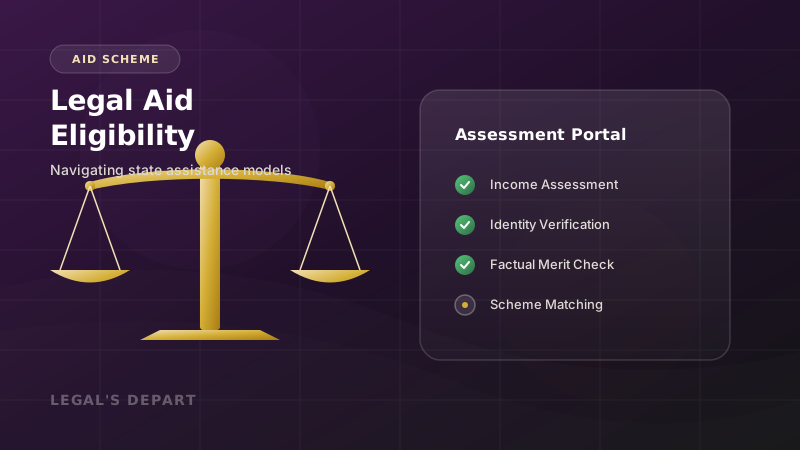
Introduction to Government Legal Assistance
Access to affordable legal support is a cornerstone of a fair and democratic justice system. Government backed legal aid schemes exist to provide vital financial assistance, legal advice, and courtroom representation to qualifying individuals, families, and organizations who would otherwise be unable to afford legal counsel.
In many jurisdictions, navigating the judicial system without representation leads to unequal outcomes. Legal aid acts as a bridge, ensuring that socioeconomic status does not dictate the quality of justice a person receives. However, because funding is limited, these schemes employ rigorous vetting processes to direct resources where they are most critically needed.
The Three Pillars of Eligibility Assessment
To determine who qualifies for government-sponsored legal representation or consultation, evaluating boards and public administrators inspect applications across three distinct criteria:
1. The Means Test (Financial Assessment)
This evaluates your household income, disposable assets, monthly expenses, and dependents. The goal is to verify if you truly lack the financial capacity to pay for private representation. Certain assets, like primary residential homes up to a specific value, are often exempted.
2. The Merit Test (Legal Assessment)
Legal experts evaluate whether your case has a reasonable prospect of success. Public funds are rarely allocated to frivolous lawsuits, cases with weak evidence, or disputes where the cost of litigation far outweighs the potential recovery amount.
3. The Public Interest Test
If a case has broader social impact, sets a crucial judicial precedent, or protects vulnerable demographics (such as children, seniors, or disabled individuals), it is prioritized for funding even if the financial thresholds are borderline.
Eligibility Threshold Reference Guide
Below is a standard representation of the household income limits typically applied in national legal aid frameworks. Please note that thresholds vary by region and household size:
| Household Size | Max Annual Gross Income | Max Allowable Disposable Assets | Assistance Level |
|---|---|---|---|
| Single Individual | Under $24,000 | $5,000 | 100% Fully Funded Aid |
| Family of 2-3 | Under $36,000 | $8,000 | Partial Subsidy / Sliding Scale |
| Family of 4+ | Under $48,000 | $12,000 | High Priority Family Aid |
Step-by-Step Application Roadmap
Securing approval for a legal aid scheme requires a methodical approach. Follow these key stages to ensure a streamlined review process:
-
Document AssemblyGather proof of income (pay stubs, tax returns), identity cards, lease/mortgage agreements, and all court summonses or legal dispute paperwork.
-
Pre-Assessment IntakeComplete a preliminary diagnostic screening through legal clinics or online consulting platforms (like Legal's Depart) to verify baseline eligibility.
-
Official SubmissionFile your formalized request with the designated regional legal aid board. Ensure all forms are fully populated; incomplete submissions cause automatic delays.
-
Review and Counsel AssignmentThe board will review the merits of your case. Upon approval, you will be assigned a certified panel lawyer or a public defender to represent you.
Common Mistakes to Avoid
Applicants frequently encounter denials or processing delays due to easily preventable errors:
- Failure to disclose secondary income: Underreporting family earnings or part-time work can lead to immediate rejection or fraud penalties.
- Vague descriptions of legal disputes: Not explaining clearly why you need a lawyer prevents the board from passing the Merit Test.
- Waiting until the last minute: If you have a court hearing in two days, applying for legal aid now might be too late for counsel to prepare.
How Legal's Depart Assists You
At Legal's Depart, we cross-reference your specific profile, income bracket, and legal challenge against hundreds of official state and civic assistance programs. We eliminate the administrative guesswork, helping you prepare a robust, complete application portfolio to ensure your voice is heard in the legal system.